Blog Name Ideas: How to Pick a Name You Won't Regret
A naming framework plus 60+ blog name ideas across five patterns, the mistakes that trap you later, and a availability checklist you can run in ten minutes.
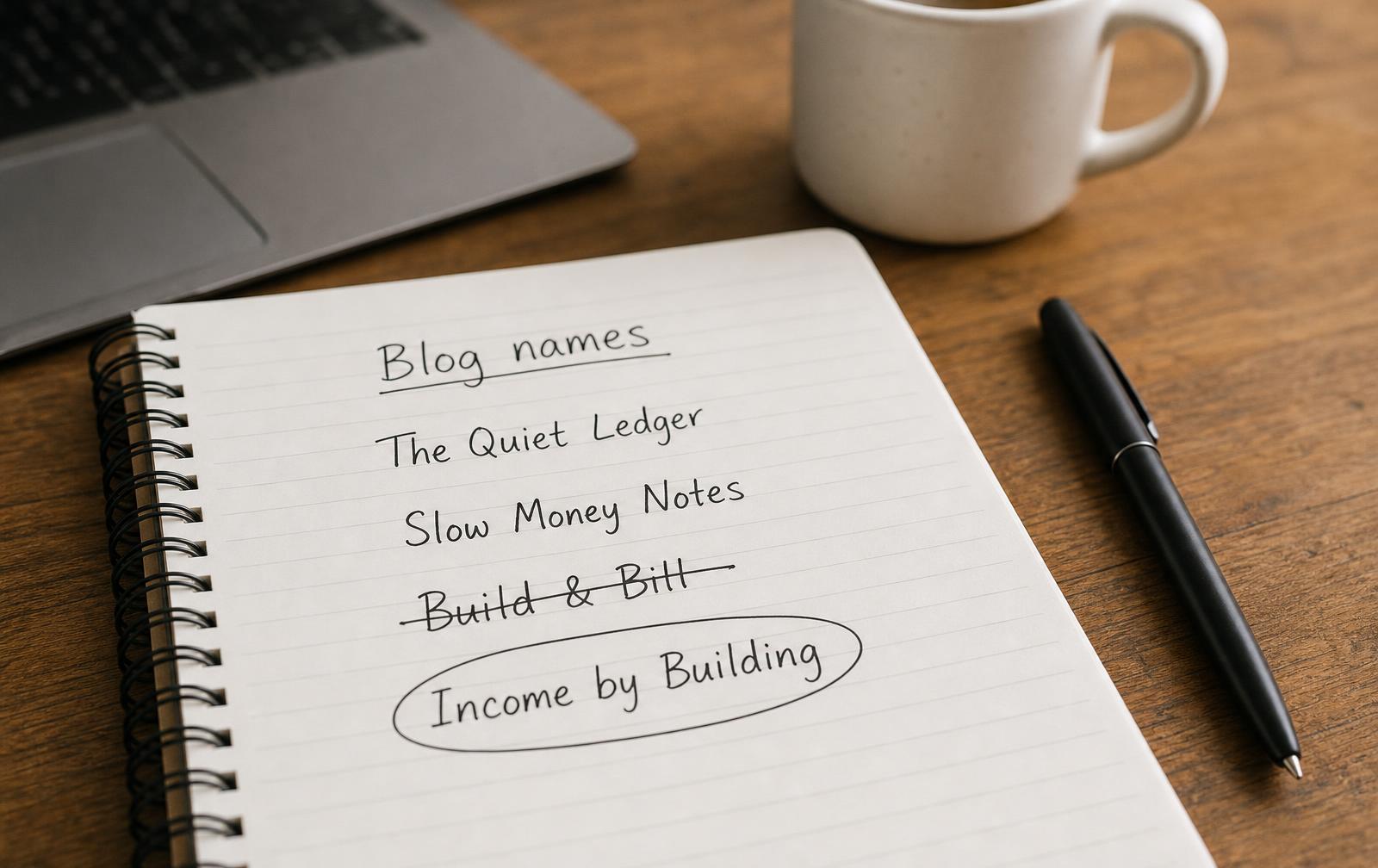
Quick answer: A good blog name is easy to say, easy to spell, and specific enough to signal who it is for without boxing you into one narrow topic. Build it from three parts — audience, promise, and hook — then check the domain and handles before you fall in love with it.
Naming a blog feels heavier than it is. You are staring at an empty box that will end up on every email, every screenshot, and every link you ever earn, so the pressure to get it perfect is real. But almost no blog fails because of its name, and almost none succeeds because of it either. What a name has to do is small: be memorable, be typeable, and hint at who you are writing for.
This guide gives you a framework instead of a random list, five naming patterns with concrete examples, the mistakes that cost people a rename two years later, and a ten-minute availability check.
What actually makes a blog name work
Four things, in order of importance.
It survives being said out loud. If you tell someone your blog name at a coffee shop and they can type it correctly without asking you to spell it, you have won. This one rule eliminates most clever names.
It is short enough to remember. Two or three words. One if you get lucky. Long names get shortened by readers anyway, and you would rather choose the short version yourself.
It signals a direction. A reader should be able to guess roughly what you write about, or at least who you write for. "Income by Building" tells you money and making things are involved. It does not have to be literal, but it should not be random.
It leaves you room to grow. This is the one people get wrong. A name that is too narrow becomes a cage. If you name a blog after a single tool, a single year, or a single tactic, you will resent it the moment your interests widen.
The naming framework: audience + promise + hook
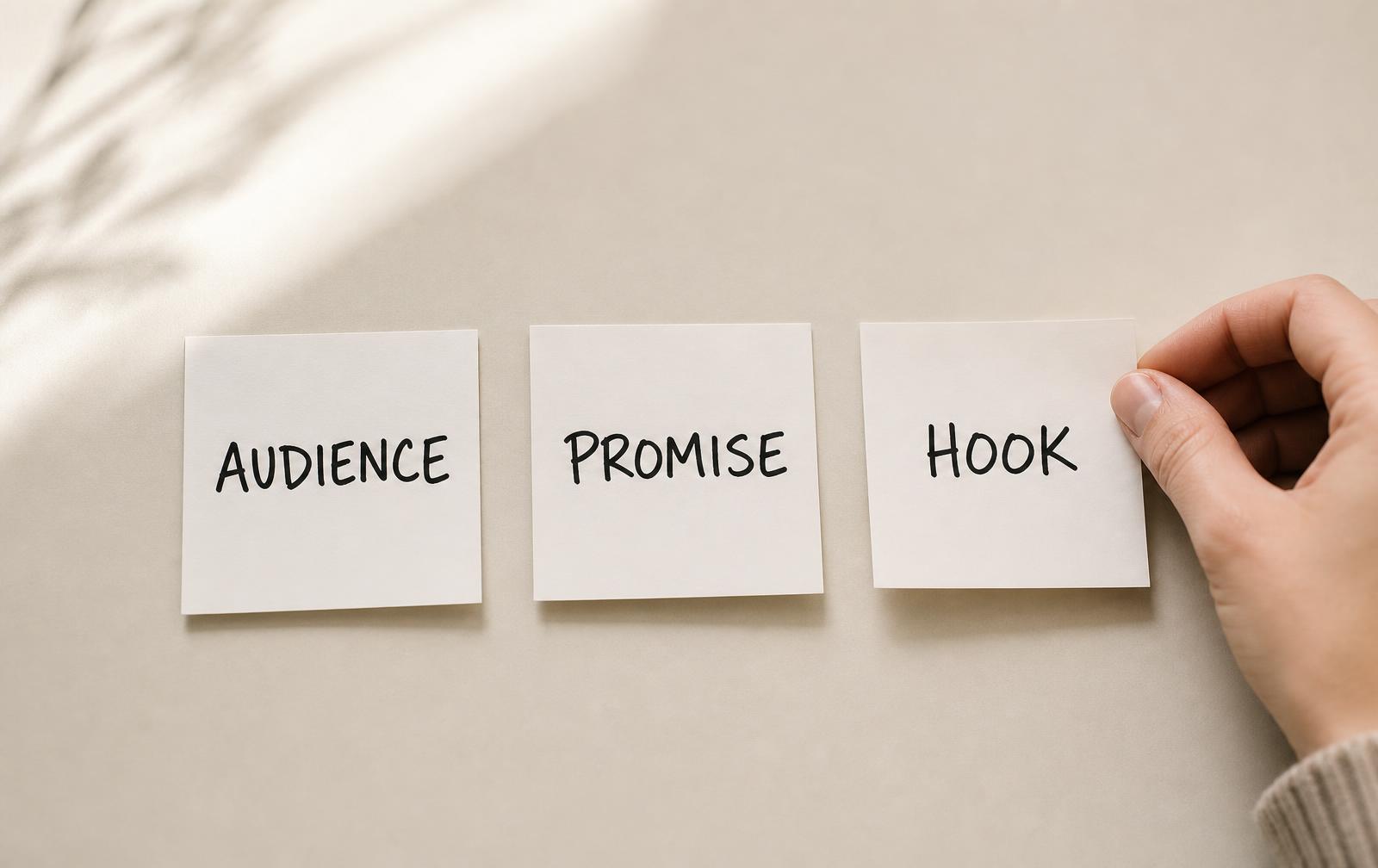
Instead of brainstorming names, brainstorm the three ingredients, then combine.
Audience — who you write for, in the plainest words you have. Freelancers. New bloggers. Nurses. People paid in equity. Solo builders.
Promise — what they get. More income. Fewer hours. Clearer writing. A first client. A blog that pays.
Hook — the flavour. A verb, a metaphor, an object, a tone. Ledger. Kitchen table. Slow. Quietly. Compound. Draft.
Write ten of each in a column. Then combine across columns without judging, twenty or thirty combinations at a time. Most will be bad. Three or four will make you pause, and one of those is usually your name.
The reason this works better than staring at a blank page: you are not trying to invent a name, you are trying to describe your blog accurately and then trim it until it sounds good.
Five naming patterns, with examples
Use these as starting shapes. Swap in your own nouns.
1. Your own name
The safest option, and underrated. It can never become inaccurate, it transfers between topics, and it builds a personal brand rather than a faceless site.
Sarah Whitmore, Whitmore Writes, Notes by Sarah Whitmore, The Whitmore Letter, Sarah Whitmore Studio, With Sarah, Whitmore & Co, Sarah Writes About Money, The Whitmore Desk, Dear Sarah.
Best for: consulting, coaching, opinion writing, anything where you are the product. Worst for: sites you plan to sell later, since the name goes with you.
2. Descriptive and literal
Says exactly what it is. Slightly less charming, considerably more clickable in search results.
The Freelance Ledger, Blog Income Notes, Small Site Handbook, The Solo Business Guide, Beginner Blog School, Blogging After Work, The Side Income Desk, Writing for Money, First Client Playbook, The Newsletter Notebook, Simple Site Income, Everyday Blog Growth.
Best for: SEO-driven blogs where clarity beats personality. Watch out for: names so generic they are impossible to trademark or remember.
3. Compound and coined words
Two ordinary words fused, or one word slightly bent. Great for availability, since almost every single dictionary word is long gone.
Draftwell, Inkline, Quietstack, Slowscale, Wordbench, Payline Notes, Buildkind, Nudgepost, Longform Co, Deskly, Publishwise, Craftbound, Sparewrite, Truework.
Best for: brand-first sites you want to grow beyond one topic. Watch out for: coined words with silent letters or unusual spellings. If you have to spell it every time, drop it.
4. Metaphor and imagery
Borrow an object or an image and let it carry the meaning.
The Kitchen Table, Compound Notes, The Long Game, Slow Money Notes, The Quiet Ledger, Morning Pages Co, The Back Porch, Lighthouse Letters, The Workbench, Signal & Noise, Paper Trail, Small Fires, The Long Bet, Open Notebook.
Best for: personality-led writing and newsletters. Watch out for: metaphors so abstract that nobody can tell what you do. Pair a vague metaphor with a clear tagline.
5. Audience-first
Name the reader. It is the fastest way to make the right person feel spoken to, and the fastest way to filter out everyone else — which is the point.
For Solo Builders, Nurses Who Write, The Freelancer''s Desk, Bloggers Over 40, Second Career Writers, The Part-Time Publisher, Quiet Founders, Weekend Bloggers, Teachers Who Blog, After-Hours Income.
Best for: tightly defined niches, which is exactly what you want. This connects to the same logic behind picking a profitable blog niche — specific beats broad, every time.
Names to avoid
- Hyphens and numbers. best-blog-tips-2026.com is unsayable and looks disposable. Say the name out loud on a phone call: if you have to explain punctuation, it fails.
- Deliberate misspellings. Kwik, Lyfe, Bloggr. You will spend the rest of your life correcting people, and you will lose traffic to the correctly spelled version.
- Trend-chasing. Anything named after a platform, a year, or a passing tool ages badly. Tools change; your blog should outlast them.
- Too narrow. "Pinterest Traffic Tips" is fine until you want to write about email. Name the outcome, not the channel.
- Anything close to an existing brand. If your name is one letter from a company with lawyers, pick another one.
- Words with two spellings. Colour or color, grey or gray, practise or practice. You will lose half your direct traffic.
The ten-minute availability check
Before you commit, run this list. It is quick and it saves a rename.
- Domain. Check the .com first. If it is taken, a clean alternative like .co is fine, but avoid awkward workarounds such as adding "the", "my", or "hq" just to force a match — those get typed wrong forever.
- Handles. Search the name on the two or three platforms you actually plan to use. You do not need every handle in existence; you need consistency where you post.
- Search it. Google the name in quotes. If page one is another blog in the same space, keep looking. You will fight that name in search for years.
- Trademark sanity check. Search the free trademark database for your country. You are looking for an exact or near match in a related category, not perfection.
- The phone test. Say it to someone and ask them to type it. If they get it right first try, you are done.
- The email test. Write it out as hello@yourname.com. Some names look great as a logo and terrible as an address.
What if the name is taken?
Almost every good name is taken somewhere. That is normal, and not a reason to give up on it.
Try a modifier that reads naturally rather than defensively: adding a real word ("The Quiet Ledger Co"), swapping a synonym ("ledger" to "books" to "records"), or shifting the hook while keeping the audience and promise. Try a different extension if your audience is technical enough not to care. Or take it as a signal: if three people already used that idea, the idea may be less distinctive than it felt.
Should you change your blog name later?
You can, and people do. It costs less than you think if you do it early and more than you think if you do it late. The real cost is redirects, backlinks, brand recognition, and the awkward month where readers are not sure they are in the right place.
The rule I use: if you are under fifty posts and the name is actively wrong — it misdescribes you, it is unsayable, or it traps you in a topic you have outgrown — change it now. If you are past that and the name is merely uninspiring, keep it. Reader trust is built by what you publish, not by how clever the header is. Spend that energy on writing more posts instead.
Pick one and start
Give yourself a deadline. Two days of thinking is productive; two weeks is procrastination wearing a costume. Run the framework, write thirty combinations, sleep on the top three, check availability, and buy the domain.
Then go write. The name matters far less than the twelfth post, and you cannot get to the twelfth post while you are still naming things.
Frequently asked questions
Does my blog name need to include my keyword?
No. Keywords in a domain give you almost nothing in modern search, and they often make the name generic. A memorable name that people search for by name is worth more than a keyword stuffed into a URL.
Should I use my own name or a brand name?
Use your own name if you are the draw and you plan to keep the site. Use a brand name if you want the option to sell, hire writers, or step back from the front of the site later.
How long should a blog name be?
Two or three words, ideally under about fifteen characters as a domain. Short enough to type on a phone without a typo and short enough to fit on a business card next to a logo.
What if the .com is taken?
A .co, .blog, or country domain is fine, especially for a personal site. What is not fine is bolting "the", "my", or "hq" onto the front purely to escape the collision, because readers will drop it when typing and land on someone else''s site.
Can I change my blog name later?
Yes, and you should if the name is actively wrong or restrictive. Set up permanent redirects from every old URL, update your profiles and email, and expect a short dip in traffic while search engines catch up.
Once the name is settled, the next step is the setup itself. Here is the honest version of how to start a blog and make money, and the tools I actually use to run this one.
Enjoyed this article?
Get the next one in your inbox.
Comments
Be the first to leave a comment.