Blog Post Ideas: How to Never Run Out of Things to Write
A repeatable system for finding blog post ideas people actually search for — five idea sources, fill-in-the-blank templates by post type, and a way to score ideas before you write.

Quick answer: You do not need more creativity, you need sources. Pull ideas from reader questions, search suggestions, competitor gaps, your own mistakes, and product comparisons, then score each idea for search demand and monetisation before you write.
You don't have an idea problem. You have a system problem.
The blank page isn't caused by a shortage of blog post ideas — there are more questions in your niche than you could answer in a decade. It's caused by not having a repeatable way to find the ideas your readers are already searching for, and a way to tell the good ones from the ones that will cost you a weekend and earn nothing. This guide gives you both: five sources that produce ideas endlessly, templates you can fill in for any niche, and a scoring filter so you only write the posts worth writing.
Want ideas faster? Try the free Blog Post Idea Generator. Enter your topic, pick an angle, and get a list of titles in seconds.
Why lists of 100 blog ideas don't help
Search "blog post ideas" and you'll find posts offering hundreds of prompts: "write about your morning routine," "do a Q&A," "share your favourite tools." They feel productive to read and produce nothing.
The problem is that a random prompt has no demand behind it. Nobody is typing "her morning routine" into Google. You end up with a published post, a small dopamine hit, and no traffic — which is worse than not writing at all, because it burns the hours you had.
A useful idea has three things attached to it before you write a word: someone is searching for it, you have something real to say about it, and there's a plausible path from that post to a subscriber or a sale. Everything below is built to produce ideas that clear all three.
Five sources that never run dry
1. Questions real people ask you
Every email, comment, DM and conversation where someone asks you something is a validated idea. Someone cared enough to type it. Keep a note file and paste every question into it verbatim — the phrasing they use is usually closer to how people search than anything you'd invent.
If you don't have an audience yet, borrow one. Reddit threads, Facebook groups and Quora in your niche are full of people describing their problem in their own words.
2. Search suggestions and People Also Ask
Type your topic into Google and stop. The autocomplete list is a ranked set of real queries. Scroll to the "People also ask" box and expand a few — each expansion loads more. Ten minutes here produces a page of ideas that definitely have demand.
Free tools that do the same job at scale: Google Trends for direction, and Google Search Console once you have traffic — the Queries report shows terms you already rank for on page two, which are the cheapest posts you will ever write.
3. Gaps in what already ranks
Open the top five results for a topic you want to cover and read them properly. You're looking for what they all skip: the step they gloss over, the cost they don't mention, the beginner assumption they make. That gap is your angle, and an angle is worth more than a new topic.
4. Your own mistakes
The thing you got wrong last month is a post nobody else can write the same way. Wrong niche, wrong tool, wrong pricing, six months on a strategy that didn't work — these posts outperform tidy advice because they carry proof that you did the thing. Google's helpful content guidance is explicit about rewarding first-hand experience.
5. Tool and workflow teardowns
Whatever you actually use to run your site is a post: what it costs, what broke, what you'd choose instead. These rank well because they answer purchase-intent questions, and they're the easiest posts to monetize honestly.
Blog topic ideas by post type
Ideas travel better as templates than as titles. Fill in the blanks with your niche and each of these produces a real post.
How-to
- How to [do the thing] when you have [constraint: no budget, no audience, two hours a week]
- How to [do the thing] step by step, honestly
- The beginner's guide to [subtopic] — what actually matters first
Comparison
- [Tool A] vs [Tool B]: which one for [specific type of person]
- The best [category] for [specific use case] — and the free alternative
- Is [popular option] worth it? A real look at the cost
Teardown / case study
- I spent [amount] on [thing]. Here's what it returned.
- [N] months of [activity]: the numbers
- What [X] taught me about [Y]
Opinion
- Why [common advice] is wrong for [audience]
- The [thing] nobody warns you about
- What I'd do differently if I started [thing] today
Resource
- The only [N] tools you need to [do the thing]
- [Topic] terms explained in plain English
- A checklist for [recurring task]
Each of these maps to a search someone is running right now. Pair the template with an idea from one of the five sources and you have a post brief, not just a title.
Stuck on titles? The Blog Post Idea Generator turns any topic into ready-to-write headlines using the same templates above.
How to filter content ideas before you write
Score each idea out of three. Anything scoring 1 goes to the bottom of the list and probably never gets written.
| Question | Yes | No |
|---|---|---|
| Is anyone searching for this? | Autocomplete, PAA or a keyword tool shows demand | You invented the phrase |
| Do I have something first-hand? | A number, a mistake, a real limitation | You'd be summarising other posts |
| Does it lead somewhere? | Newsletter, product, or a relevant tool | Pure entertainment |
Two out of three is publishable. Three out of three goes to the top of the queue. If you're new, weight the first column hardest — see how to find a profitable blog niche for choosing a space where those searches exist at all.
Build an idea bank so the blank page stops happening
The reason writers stall isn't the writing — it's deciding what to write on the morning they sit down. Separate the two jobs.
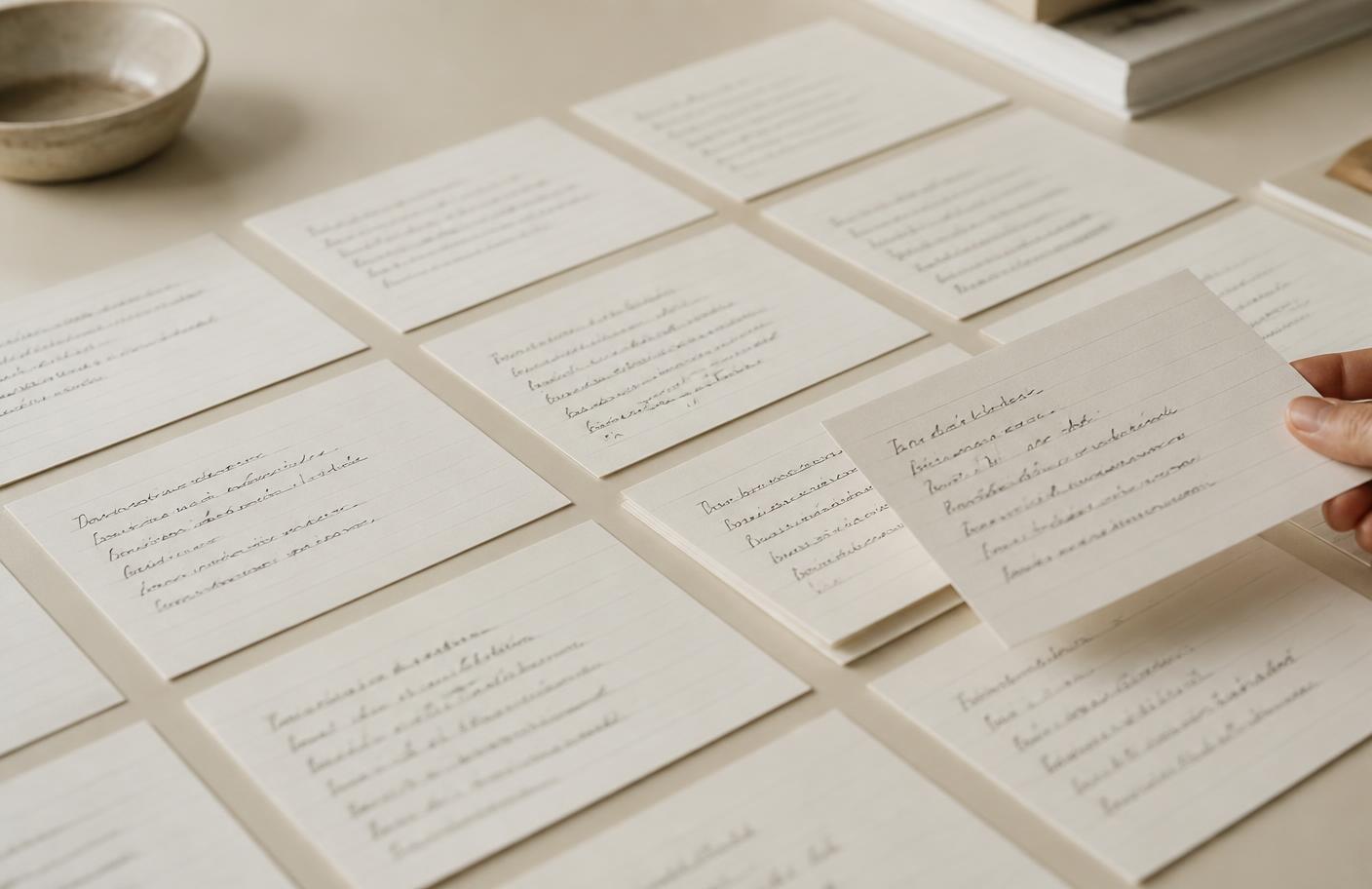
Keep one document. Every time you hit an idea from any of the five sources, add a line: the working title, where the idea came from, and one sentence on your angle. Don't evaluate it — capture is a separate task from judging. Once a month, score the bank with the table above and pull the top three into your calendar.
Twenty lines in that file means you never start a writing session by staring at nothing. That single change does more for output than any productivity system.
Turn an idea into a published post
An idea with an angle is already half a draft. Outline it as questions, answer them in order, and edit last. That workflow — plus the timers and templates in how to write blog posts faster and plan them with a content calendar — is what turns a full idea bank into a published archive.
And once posts are published, they should do more than sit there. Each one is an entry point to your list: see email marketing for bloggers for turning readers into subscribers, and how to monetize a blog for what those subscribers eventually become.
Key takeaways
- Random idea lists fail because they have no search demand behind them.
- Five sources produce endless validated ideas: reader questions, autocomplete and People Also Ask, gaps in ranking posts, your own mistakes, and tool teardowns.
- Templates by post type turn any idea into a brief for any niche.
- Score every idea on demand, first-hand experience, and where it leads before writing.
- Keep an idea bank so choosing and writing are never the same task.
Frequently asked questions
How do I come up with blog post ideas when I'm just starting out?
Borrow other people's questions. Read Reddit threads, Facebook groups and forum posts in your niche and collect the questions people ask in their own words. Combine each with a post-type template above and you'll have a month of briefs in an afternoon.
How do I find blog post ideas that will actually get traffic?
Start from search rather than imagination. Google autocomplete and the "People also ask" box show real queries; Search Console shows the terms you already rank for on page two. Ideas taken from those places have demand attached before you write.
How do I research a blog post idea before committing to it?
Read the top five ranking results end to end. If they all answer the question well and you have nothing to add, skip it. If they share a gap — a skipped step, an unmentioned cost, a wrong assumption about beginners — that gap is your angle and the post is worth writing.
How many blog post ideas should I keep on hand?
Twenty is a comfortable buffer. It's enough that you never start a session choosing a topic, and small enough that the list stays current rather than becoming an archive you ignore.
How often should I publish?
A rhythm you can hold for a year beats a burst you can hold for a month. One good post a week is plenty; one every two weeks is fine if each one is genuinely useful. Consistency matters more than frequency.
Once you have a topic, the next question is usually length. Here is my take on how long should a blog post be for every common format.
Enjoyed this article?
Get the next one in your inbox.
Comments
Be the first to leave a comment.